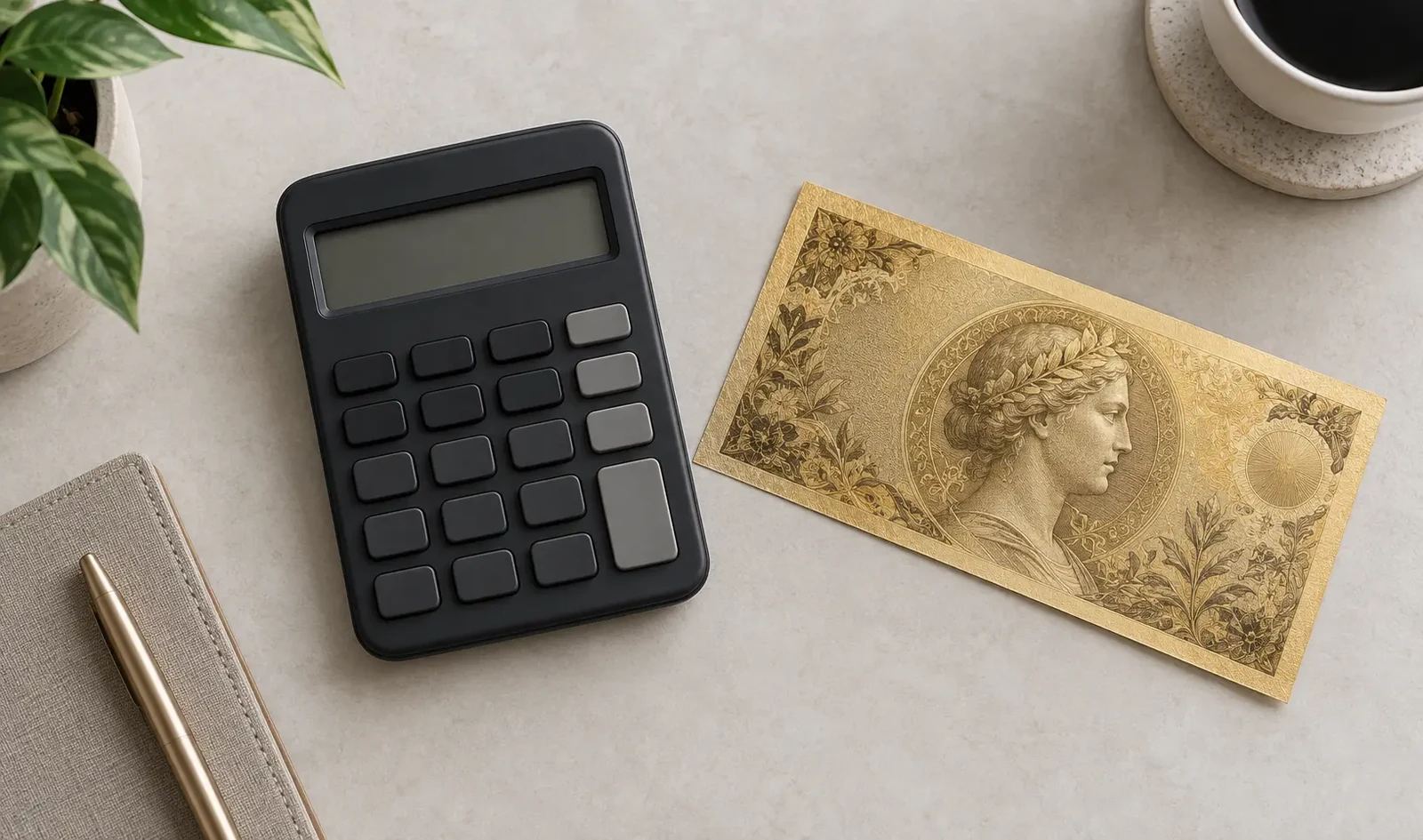
Why Goldbacks Cost More Than Their Gold: The Premium Explained
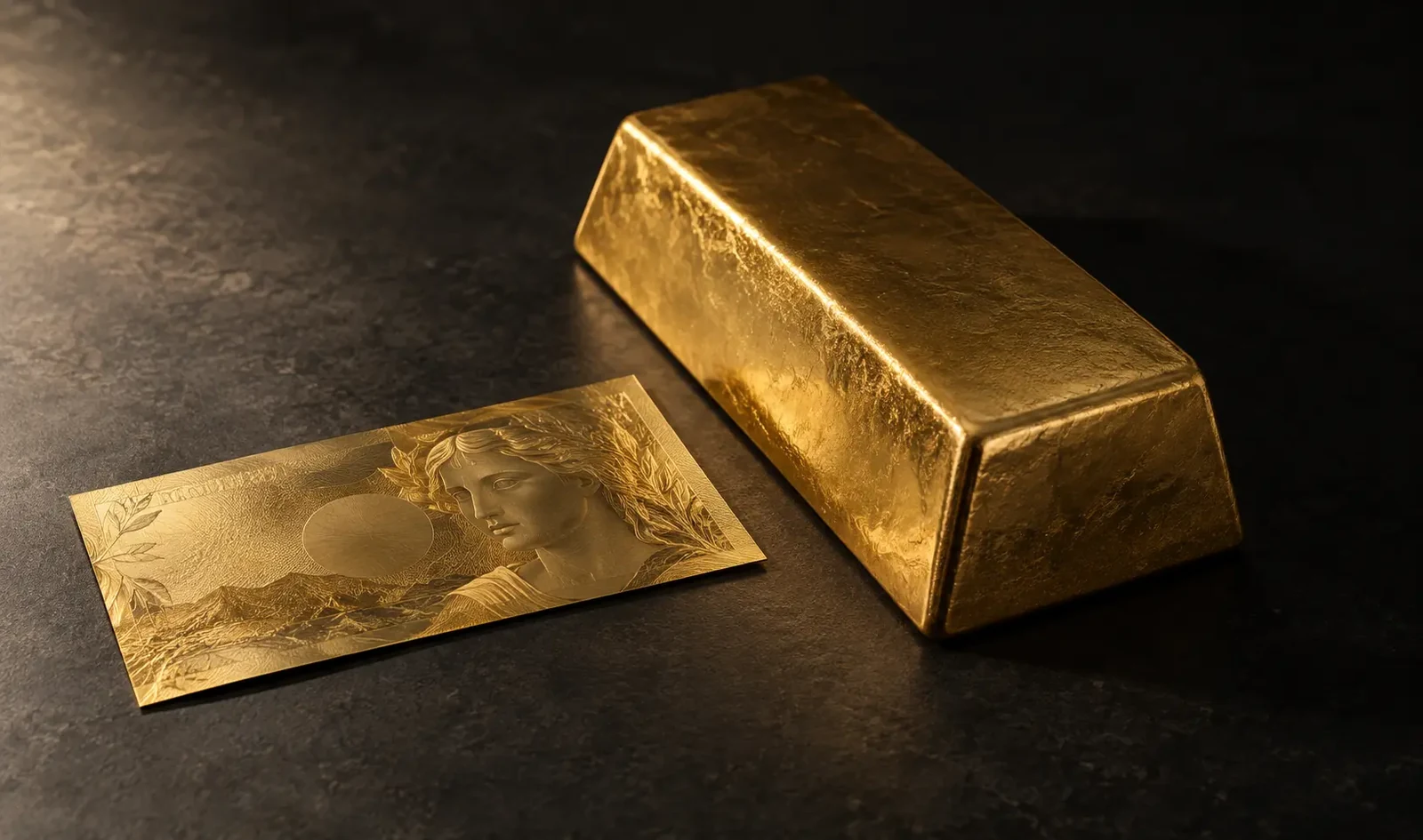
Every Goldback sells for more than the market value of the gold inside it. That gap is the premium, and it is the single most misunderstood number in this market.
No published benchmark exists for it. Neither the issuer nor any dealer publishes a reference premium range, so anyone telling you a given premium is good or bad is inventing the standard they are judging against.
Key takeaways
- A premium is not simply a markup. It pays for turning gold into a durable, divisible, spendable note.
- Smaller denominations carry proportionally more premium, because a similar production cost is spread over less gold. This is arithmetic, not a pricing decision aimed at small buyers.
- Nobody publishes a reference range. Treat any “typical premium” figure, including ones you may have seen from us before, as unsourced unless it names where it came from and when.
- Compare like with like. A standard note, an Alpha and a graded collectible are different products, and so are their premiums.
- The premium is a real cost, not a fee to be outraged by. Whether it is worth paying depends on what you want the gold to do.
If you have compared a Goldback against a gold bar on a price-per-ounce basis, the gap is startling, and the usual reaction is that someone is overcharging. That reaction is worth examining rather than dismissing, because the honest answer is neither “it is a rip-off” nor “it is worth it”. It depends entirely on what you are buying the gold for.
What the Premium Actually Pays For
Bullion is simple to produce: melt metal, pour it into a mould, stamp it. A Goldback is not bullion. It is gold deposited in a controlled layer and sealed inside polymer, produced by Valaurum using the Aurum vacuum-deposition process, then printed with artwork and security features.
So the premium covers, roughly in order of size:
- Manufacturing. Depositing a precise, verifiable quantity of gold into a flexible note is a materially harder process than casting a bar.
- Artwork and security. Each series carries original engraved artwork and anti-counterfeiting features, designed per state and per denomination.
- Distribution. Getting notes to dealers and merchants across a network, in small units.
- The seller’s margin. The part people assume is the whole thing, and generally the smallest component.
None of that makes a premium good value by itself. It does mean the comparison “this costs more per ounce than a bar” is comparing two different products, in the way that a bottle of water costs more per litre than a tap.
Why Smaller Denominations Cost Proportionally More
This is the part that looks like a trick and is not.
Producing a note involves costs that barely change with the amount of gold in it: the same deposition process, the same artwork, the same security features, roughly the same handling. A ¼ Goldback holds 1/4,000 of a troy ounce. A 50 Goldback holds 1/20. The larger note carries 200 times the gold, but it does not cost anything like that multiple to produce.
So the fixed cost is spread thinly across a large note and thickly across a small one. The result is that premium as a percentage falls as denomination rises, consistently, for structural reasons rather than commercial ones.
| Denomination | Gold content | Fixed production cost is spread over |
|---|---|---|
| ¼ Goldback | 1/4,000 troy oz | 0.25× the base unit |
| ½ Goldback | 1/2,000 troy oz | 0.5× the base unit |
| 1 Goldback | 1/1,000 troy oz | 1× the base unit |
| 5 Goldback | 1/200 troy oz | 5× the base unit |
| 10 Goldback | 1/100 troy oz | 10× the base unit |
| 25 Goldback | 1/40 troy oz | 25× the base unit |
| 50 Goldback | 1/20 troy oz | 50× the base unit |
Gold content is a published specification, captured 2026-07-24. The premium itself is not shown here, because it varies by seller and by day and no benchmark exists to state one against.
The practical consequence: if your goal is maximum gold for your money, larger denominations get you closer, and bullion gets you closest of all. If your goal is the smallest spendable unit of real gold, the fractional notes are the only thing that does it, and the premium is what that capability costs.
Why We Will Not Tell You What a “Normal” Premium Is
This is the part where most coverage supplies a number, and we are not going to.
Goldback publishes gold content, denominations and a reference exchange rate. It does not publish a premium benchmark. Neither does any dealer. We checked the issuer’s own published material directly and found no reference range anywhere.
That means any “typical premium is X to Y percent” figure has one of two origins: someone sampled some prices on some day and did not tell you which, or someone made it up. Neither is a standard you can hold a seller to, and both go stale as gold moves.
We are being specific about this because we published exactly that mistake ourselves. Our premium calculator previously carried a table of “typical ranges” per denomination and used it to label prices as good deals or overpriced. Those figures had no source. We removed them on 6 September 2026, and the calculator now reports the premium without judging it. If you used it before that date and it told you a price was excellent or overpriced, disregard that verdict.
How to Compare a Premium Honestly
Without a benchmark, comparison is still possible: it just has to be one you run yourself, rather than one you read.
- Fix the product. Same state series, same denomination, same edition. A standard note, an Alpha and a graded Limited Early Release are not interchangeable.
- Fix the day. Gather every price on the same day. Gold moves, and dealers reprice whole catalogues at once.
- Work out the melt value yourself from the denomination’s published gold content and the current spot price.
- Express the gap as a percentage for each seller. That number is meaningless alone and meaningful in comparison.
- Include the whole transaction. Shipping, payment-method surcharges and any minimum order change the real figure. So does how you would sell.
Our premium calculator does step three and four for you and deliberately stops there. The fractional comparison calculator does the same across formats, using prices you supply.
Is the Premium Worth Paying?
That depends on what you want, and it is not a question a page can answer for you. What can be said plainly is what you are trading.
- You are giving up gold per pound spent. Bullion delivers more metal for the same money, and always will.
- You are buying divisibility. A fractional Goldback is a far smaller unit of gold than any coin, and can be handed over as payment where accepted.
- You are buying a physical object with collector interest. Which may or may not hold value; past collector premiums do not guarantee future ones.
If the divisibility and spendability are not things you will use, the premium buys you little, and that is a legitimate reason to buy bullion instead. We would rather say that plainly than talk you into a purchase.
Frequently Asked Questions
Is the premium a fee that goes to the dealer?
Only partly. Most of it is embedded in the note before a dealer sees it: manufacturing, artwork, security features and distribution. The dealer’s margin is one component, generally the smallest.
Does the premium go down if I buy more?
Sellers may price differently at volume, and that is worth asking about directly. But the structural part, the fixed cost spread across a small amount of gold, does not change with quantity.
Do Alpha editions carry a bigger premium?
Alpha notes are first-print runs and generally trade above standard notes of the same denomination. By how much is set by collector demand rather than any published rule, which is why we do not state a figure.
Will the premium come back when I sell?
Not necessarily, and this is the question most worth asking before buying. Ask any seller how they would buy the note back and on what basis, before you need the answer.
Before buying against any of this, the buyer verification checklist covers how to confirm a listing states its series, edition and denomination correctly, and what to check on the price.
Prices, availability, denominations and promotions change without notice. Verify the live listing before ordering.
We may earn a commission at no additional cost to you. This coverage may not be neutral or independent.
Educational content only, not financial advice. Goldbacks are privately issued and are not legal tender under 31 U.S.C. § 5103; merchant acceptance is voluntary everywhere. Prices, premiums and seller terms change without notice. Past performance does not guarantee future results.
Continue Reading