Goldbacks vs Junk Silver: Complete Comparison for Preppers and Savers
Ask ten precious-metals holders which is better for prepping, bartering, or fractional savings — Goldbacks or junk silver — and you'll get ten different answers. Both are legitimate options. Both solve similar problems. But they solve them differently, and the right choice depends on what you actually plan to do with them.
This guide breaks down the real comparison: what each is, how they perform on the criteria that matter, and which fits which use case.
- Different metals, different roles. Junk silver offers bulk value cheaply; Goldbacks offer very small gold denominations in a durable format.
- Junk silver is widely recognised and trades on well-established markets. Goldbacks depend on a smaller, voluntary network.
- Goldbacks carry a higher premium over melt, reflecting manufacture and artwork as well as metal content.
- For weight-to-value density, gold wins decisively — silver becomes bulky fast at meaningful sums.
- Many holders keep both. They solve different problems rather than competing directly.
What Is Junk Silver?
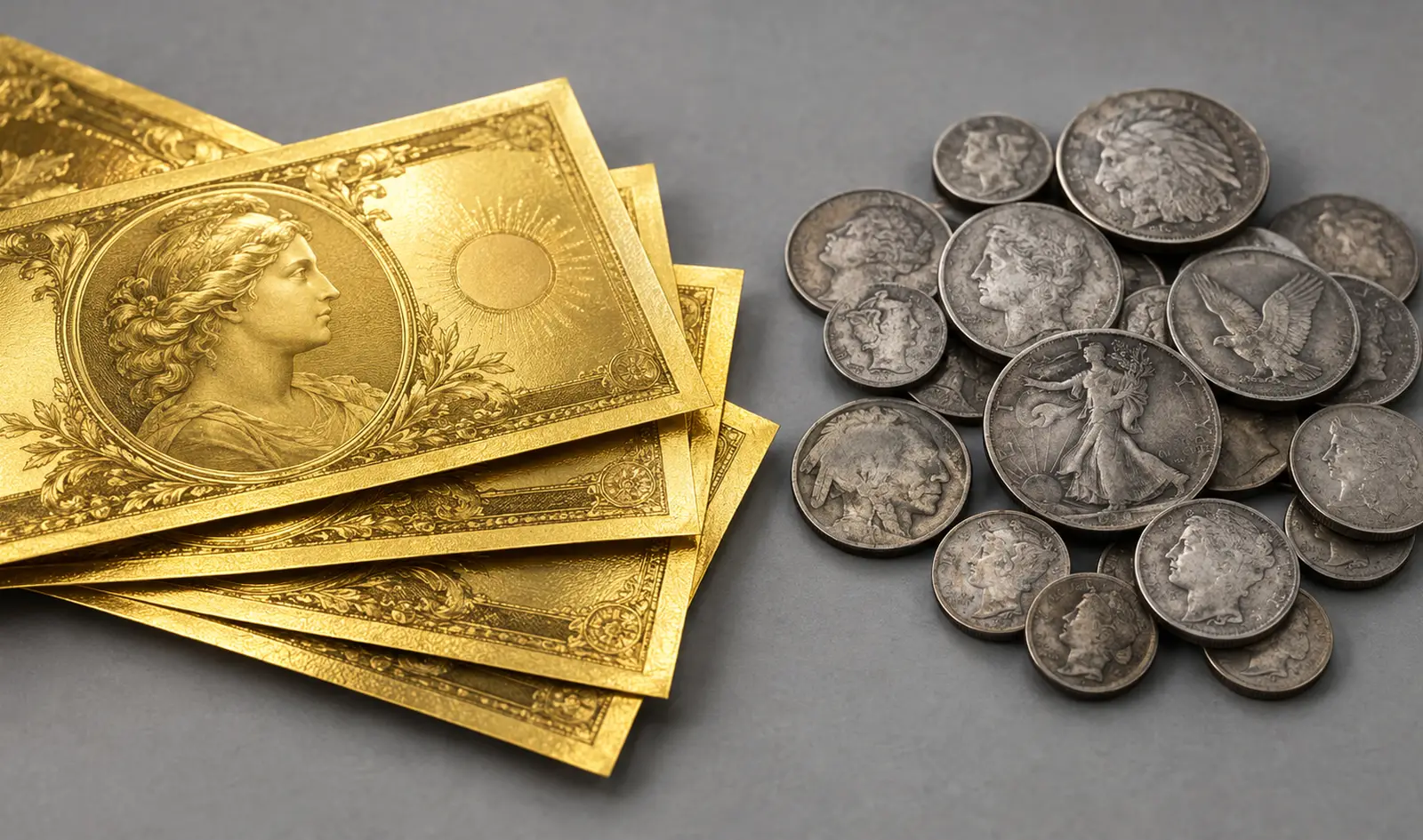
"Junk silver" refers to pre-1965 US dimes, quarters, and half dollars made of 90% silver. The nickname is misleading — there's nothing junk about these coins. They're called that only because they have no collector premium beyond their silver content.
Common junk silver coins:
- Mercury dimes (1916-1945) — 90% silver
- Roosevelt dimes (1946-1964) — 90% silver
- Washington quarters (1932-1964) — 90% silver
- Franklin half dollars (1948-1963) — 90% silver
- Kennedy half dollars (1964 only) — 90% silver
Each coin contains a specific amount of pure silver — a 1964 quarter contains roughly 0.1808 troy ounces of silver, for example. Buyers typically purchase junk silver by "face value" (a $10 bag of silver quarters, $100 face value in Mercury dimes, etc.) and pay a premium over the silver melt value.
What Are Goldbacks?
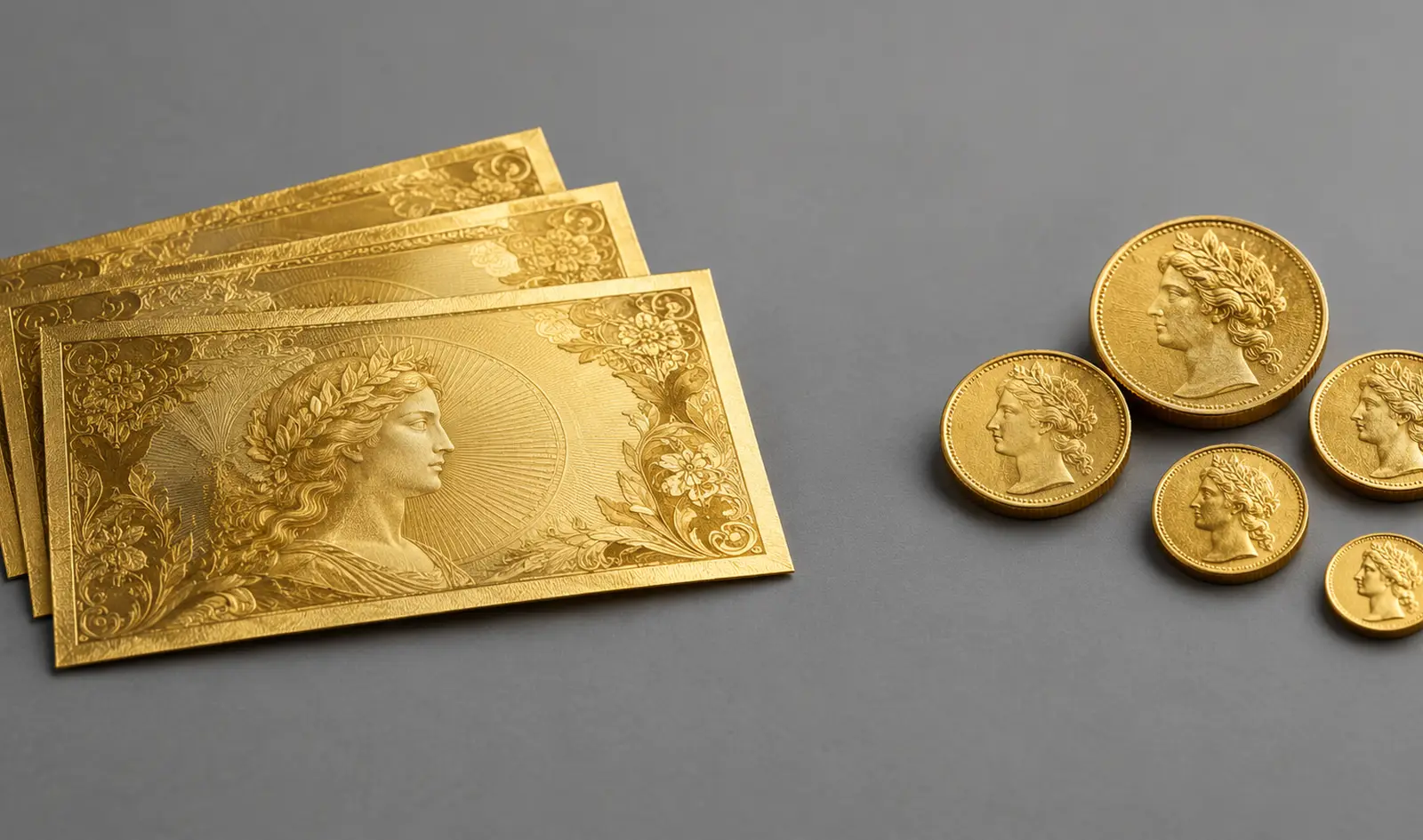
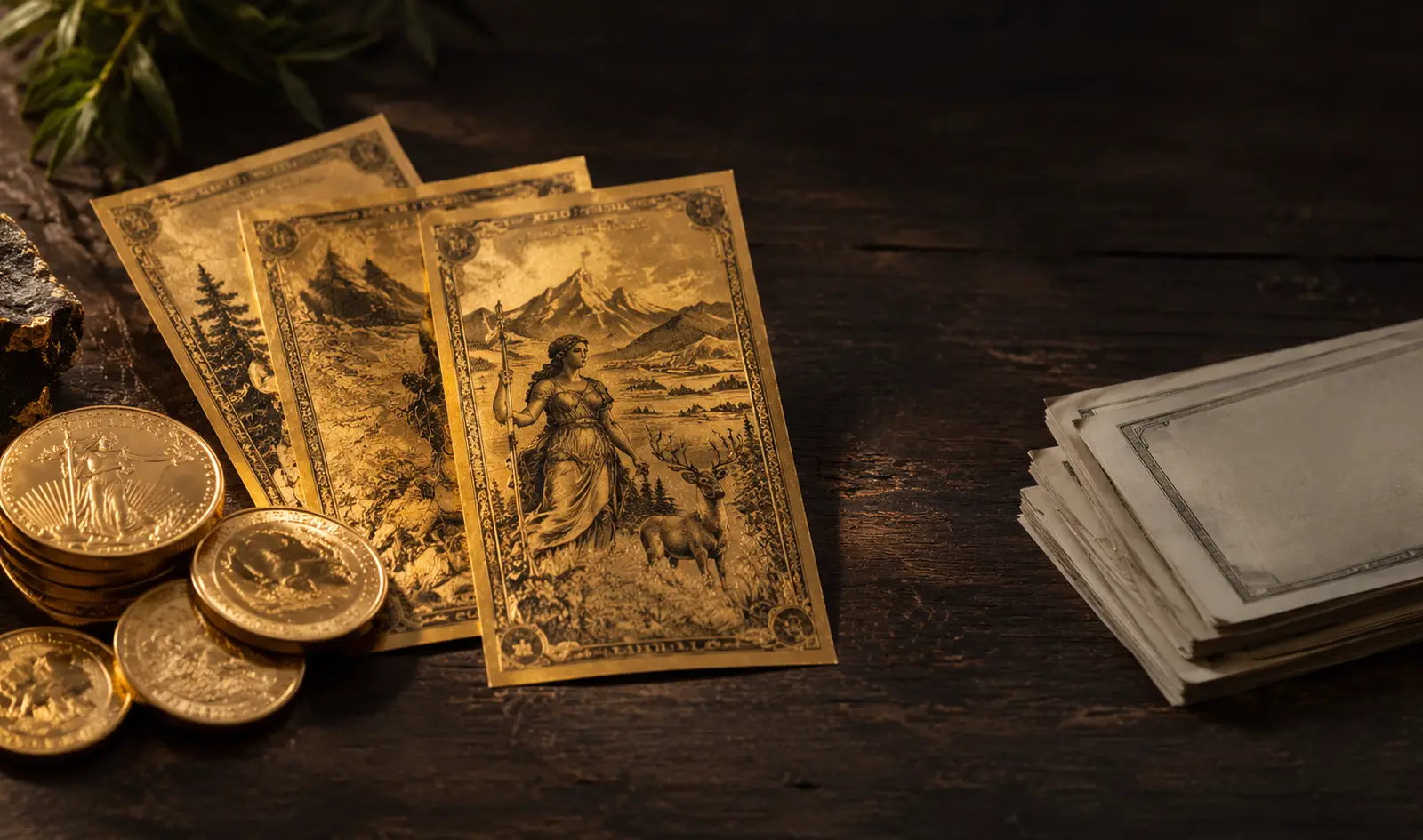
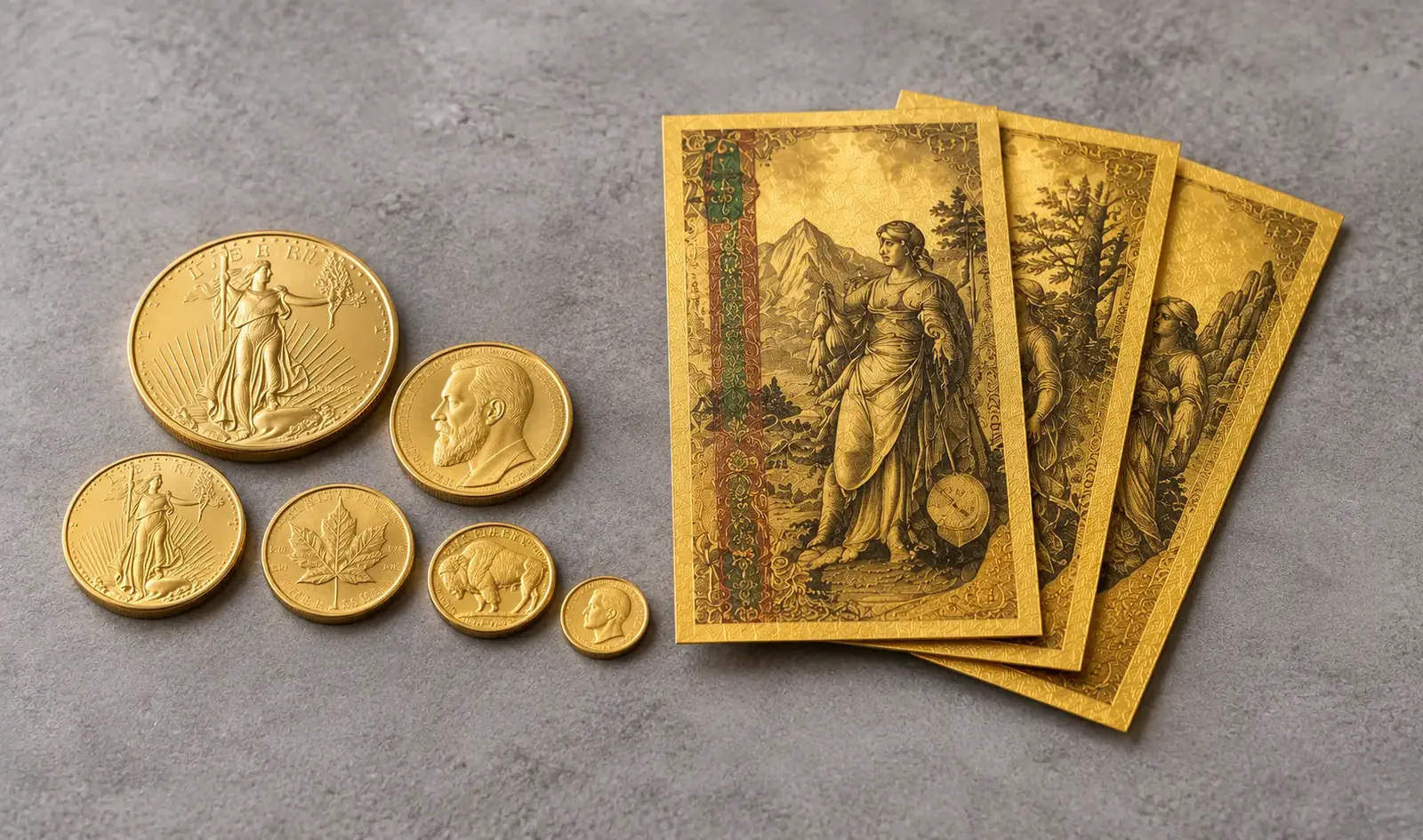
Goldbacks are physical gold currency notes containing precise fractions of a troy ounce of .999 fine 24-karat gold. Each note is produced using Valaurum's vacuum deposition process that seals real gold between two protective polymer layers.
Available denominations:
- 1/2 Goldback — 1/2000 oz (some state series)
- 1 Goldback — 1/1000 oz
- 5 Goldback — 1/200 oz
- 10 Goldback — 1/100 oz
- 25 Goldback — 1/40 oz
- 50 Goldback — 1/20 oz
Available across nine state-specific series (Utah, Nevada, New Hampshire, Wyoming, South Dakota, Arizona, Florida, Oklahoma, Idaho).
Head-To-Head Comparison
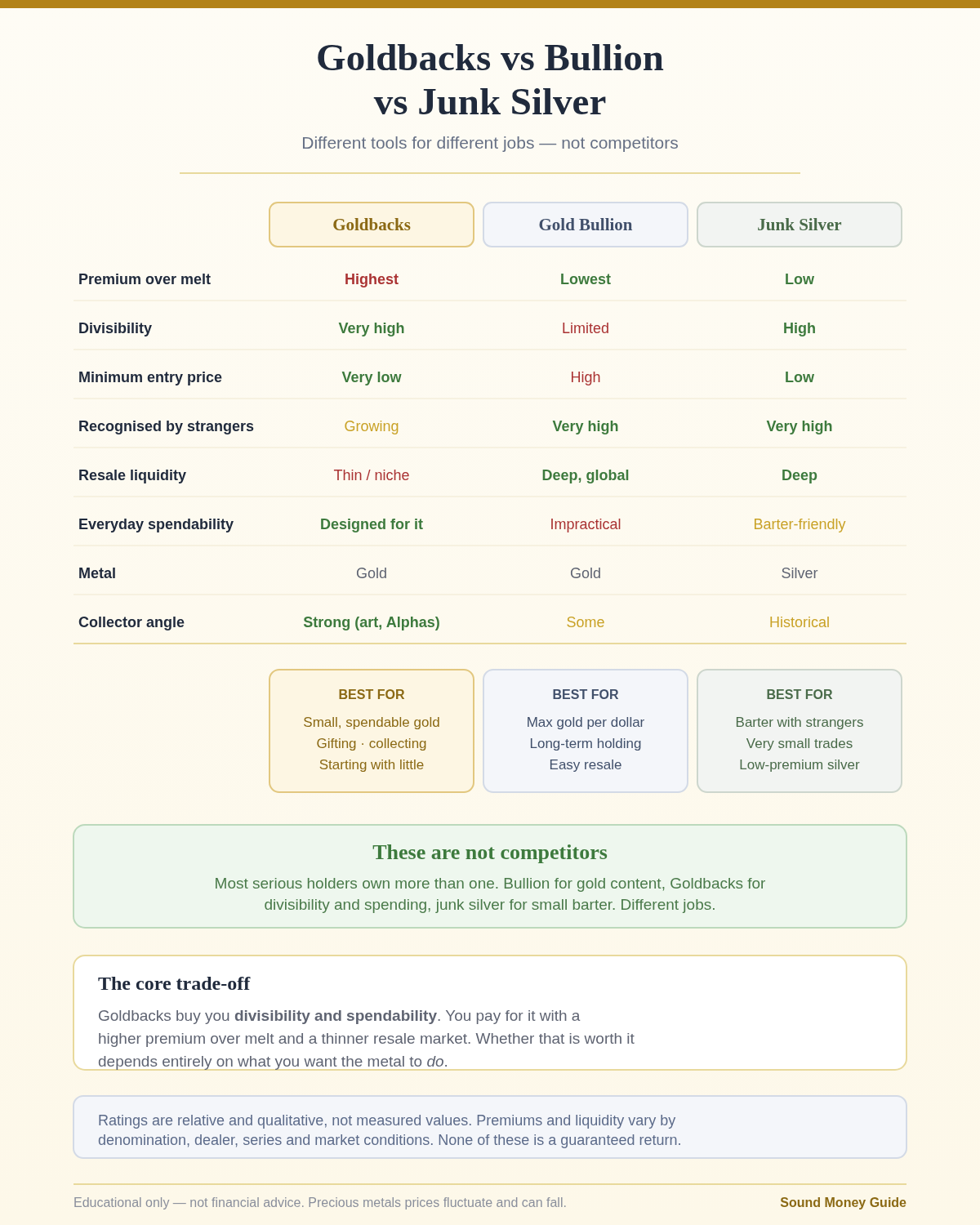
Different tools for different jobs. Most serious holders own more than one.
| Criterion | Junk Silver | Goldbacks |
|---|---|---|
| Metal content | 90% silver (dimes/quarters), 40% (some halves) | 99.9% pure 24-karat gold |
| Value per unit | Small (~$2-$4 per pre-1965 dime at current silver prices) | Larger (~$5-$250 per note) |
| Divisibility | High (small coins) | Very high (fractional gold) |
| Recognizability | Very high (US legal tender) | Growing (in Goldback merchant network) |
| Counterfeit resistance | Moderate (silver can be tested) | High (serialization, microprinting, UV features) |
| Merchant acceptance | Universal (US coins are always legal tender) | Goldback-network merchants (company-reported figure below) |
| Premium over spot | 10-30% depending on market | 40-120% depending on denomination |
| Storage | Bulky (weight per dollar value) | Compact (paper-thin notes) |
| Portability | Heavy for meaningful sums | Wallet-portable |
| Barter appeal | Universally recognized silver | Requires recipient knowledge of Goldbacks |
| Historical durability | Proven for 100+ years | Newer format (Goldbacks since 2019) |
| Aesthetic value | Coin collector interest | State-specific artwork; collector premium on Alphas |
When Junk Silver Wins
Barter with Strangers
This is the biggest junk silver advantage. In a barter scenario with someone unfamiliar with Goldbacks, a pre-1965 silver dime is instantly recognizable, verifiable (weight, metal test), and valuable as a trust signal. Goldbacks require the counterparty to know what they are.
Situation: an emergency scenario, trading with a stranger for gasoline. A junk silver quarter works. A 1 Goldback might not.
Very Small Transactions
A pre-1965 dime with roughly $2-$4 of silver value is smaller than the smallest common Goldback denomination (1 Goldback at ~$5-$7). If you need to trade for something worth $2-$3, junk silver is more granular.
Lower Premium over Spot
Junk silver typically carries a 10-30% premium over pure silver melt value. Goldbacks carry a 40-120% premium over pure gold melt. If you're maximizing metal content per dollar spent, junk silver delivers better.
Historical Proof
Junk silver has been used, traded, and hoarded for 100+ years. Goldbacks are a newer format (introduced 2019). Longer historical precedent matters to some buyers.
When Goldbacks Win
Value Density
A single 50 Goldback holds ~$180-$250 in current value. Getting the same value in junk silver requires roughly 200+ dimes — heavy, bulky, and slow to count. For meaningful savings storage or high-value barter, Goldbacks are dramatically more portable.
Fractional Gold Exposure
Junk silver gives you silver. Goldbacks give you gold. Gold and silver have different portfolio characteristics, and if your goal is fractional gold exposure specifically, Goldbacks are one of the few fractional gold options under $10 per unit.
Counterfeit Resistance
Goldbacks have serialization, microprinting, UV-reactive ink, and complex holographic elements. Junk silver can be counterfeited (fake silver coins do exist, though usually detectable with basic testing). For anyone worried about counterfeit precious metals, Goldbacks are meaningfully harder to fake at these price points.
State-Series Collectibility
Goldbacks have artistic value that junk silver doesn't. Nine state-specific series with unique designs create genuine collector appeal. Alpha (first-print) editions in particular can carry a collector premium above standard notes — though that premium is collector-driven, thinly traded, and not guaranteed. Treat any specific "past appreciation" figure you see quoted as an unaudited secondary-market number, not a documented return.
Modern Merchant Network
Goldback Inc. reports a growing network of US businesses that accept Goldbacks as voluntary currency (see the company-reported merchant figure below). Junk silver requires the merchant to know it's worth its silver content — most modern retail employees don't.
Aesthetic and Gifting
Goldbacks are visually distinctive and make impressive gifts. A single Goldback with real gold content is a more memorable gift than a jar of dimes.
On merchant counts: Goldback's accepting-merchant totals are company-reported and change over time. Where you see a figure like "3,000+ merchants," treat it as a Goldback-reported, point-in-time number rather than an independently audited or evergreen fact.
The Prepper Perspective
For preppers specifically, the answer usually isn't "one or the other" — it's both, in different roles.
Junk Silver Role: Barter with Strangers
- Stack pre-1965 dimes and quarters for small barter transactions
- Universal recognition as silver
- Small denominations for granular trades
- Lower per-unit value = less risk if you're overcharged
Goldbacks Role: Long-Term Store of Value + Community/Network Barter
- Higher-value savings in a portable format
- Barter within communities where Goldbacks are known (increasingly common)
- Alpha editions for those who value first-print collectibility (with the caveats above)
- Compact enough to hide, carry, or protect during emergencies
A well-diversified prepper precious-metals stack might include:
- Junk silver dimes/quarters: small-transaction barter
- 1 oz silver rounds: medium-value silver
- Goldbacks (1 and 5 denominations): portable gold for higher-value trades
- Fractional gold coins: larger stored value
- Standard gold bars/coins: long-term wealth preservation
Not either/or. Different tools for different situations.
The Saver / Long-Term Holder Perspective
If your goal is inflation-resistant long-term savings (rather than barter preparedness), the comparison shifts:
Junk Silver as Savings
- Silver has historically appreciated but with high volatility
- Bulky to store at scale
- Sale requires finding a coin dealer or private buyer
- Value tracks silver spot
Goldbacks as Savings
- Gold content, plus a collector premium on some editions
- Compact storage even at scale
- Sale through the Goldback dealer network is straightforward
- The collector premium on Alpha editions can add value but is not guaranteed
Both are legitimate long-term holds. Goldbacks offer better value density and gold exposure; junk silver offers a broader, more universal liquidity market. Which matters more depends on your goals, and neither carries a guaranteed return.
Where to Buy
Goldbacks
Alpine Gold Exchange — full state series, Alpha inventory, intermittent store-credit offers on qualifying orders (observed on 24, 26 and 27 August 2026 and not displayed on 28 August 2026), BBB accredited, A+ rating (BBB, captured 24 Sep 2026).
Junk Silver
APMEX, JM Bullion, SD Bullion, Money Metals — all carry junk silver by the roll, bag, or face value amount.
Both
If you're building a diversified precious-metals stack including junk silver AND Goldbacks, having accounts at both a specialist Goldback dealer (Alpine Gold) and a broad bullion dealer makes sense.
Frequently Asked Questions
Should preppers buy junk silver or Goldbacks?
Both, in different roles. Junk silver for small-transaction barter with strangers who recognize it as silver. Goldbacks for higher-value savings and community-network trades. They complement each other rather than compete.
Which has better appreciation potential?
Neither carries a guaranteed return. Junk silver mostly tracks silver spot. Goldbacks track gold spot, and some Alpha editions carry a collector premium on top — but that premium is thinly traded and any quoted "past appreciation" figure is an unaudited secondary-market number, not a documented or repeatable return.
Which is more recognizable in an emergency?
Junk silver, hands down. Pre-1965 US coins are recognized as silver by almost anyone in the US. Goldbacks require some familiarity with the concept.
Which has lower premium over spot?
Junk silver — typically 10-30% premium vs Goldbacks at 40-120%. If maximizing metal content per dollar is your only goal, junk silver wins.
Are Goldbacks worth the premium?
Depends on what you're paying for. If you want spendability, artistic value, collector appeal, and fractional gold exposure — they may be. If you want raw metal content only, silver bars or coins deliver more per dollar.
Can I mix junk silver and Goldbacks in the same strategy?
Absolutely — most serious precious-metals holders do. Different tools for different situations.
Bottom Line
Junk silver and Goldbacks aren't really competitors — they're complementary tools that solve overlapping but distinct problems.
Junk silver wins for barter with strangers, small transactions, lower premium over spot, and a 100+ year historical track record.
Goldbacks win for value density, gold-content diversification, counterfeit resistance, collector appeal, and modern merchant-network integration.
The strongest precious-metals strategies typically include both, plus standard bullion (bars, coins). Different tools for different situations. If you're building preparedness or long-term savings, don't force yourself to choose — combine them intelligently.
For the Goldback side of your strategy, Alpine Gold Exchange is a strong option — full state series inventory, Alpha availability, and services that scale from small purchases to serious collector positions.
👉 Browse Goldbacks at Alpine Gold Exchange
This article is for educational purposes only and does not constitute financial advice. Precious metals prices fluctuate. Past performance does not guarantee future results.
Continue Reading